Theresesgate
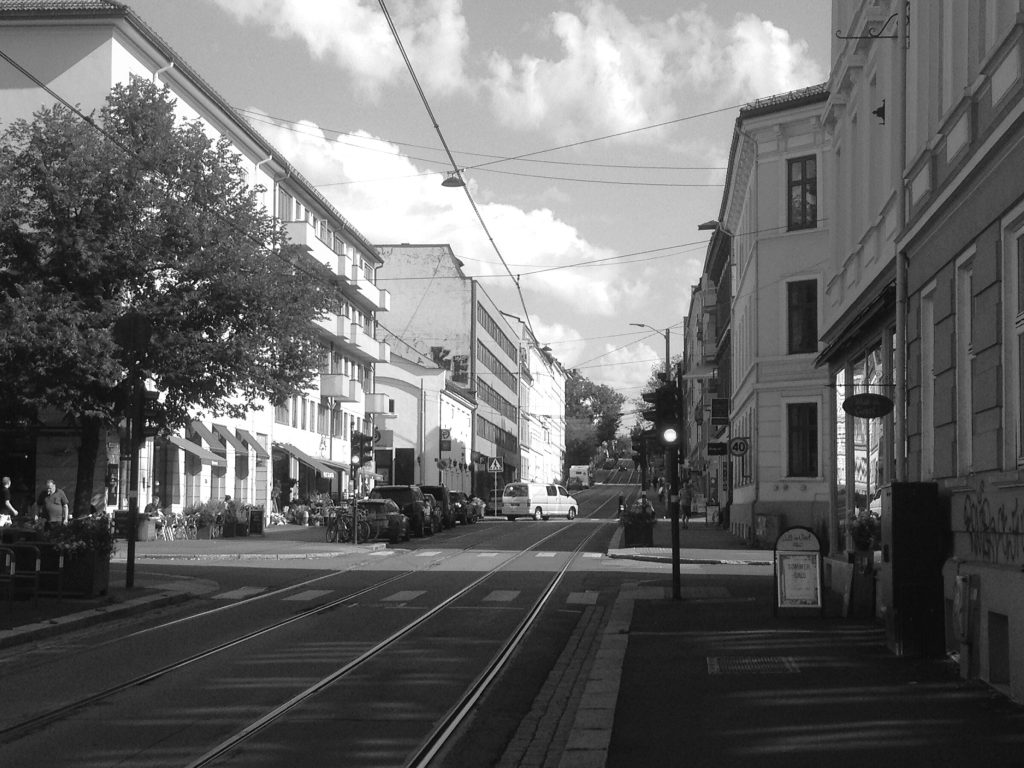
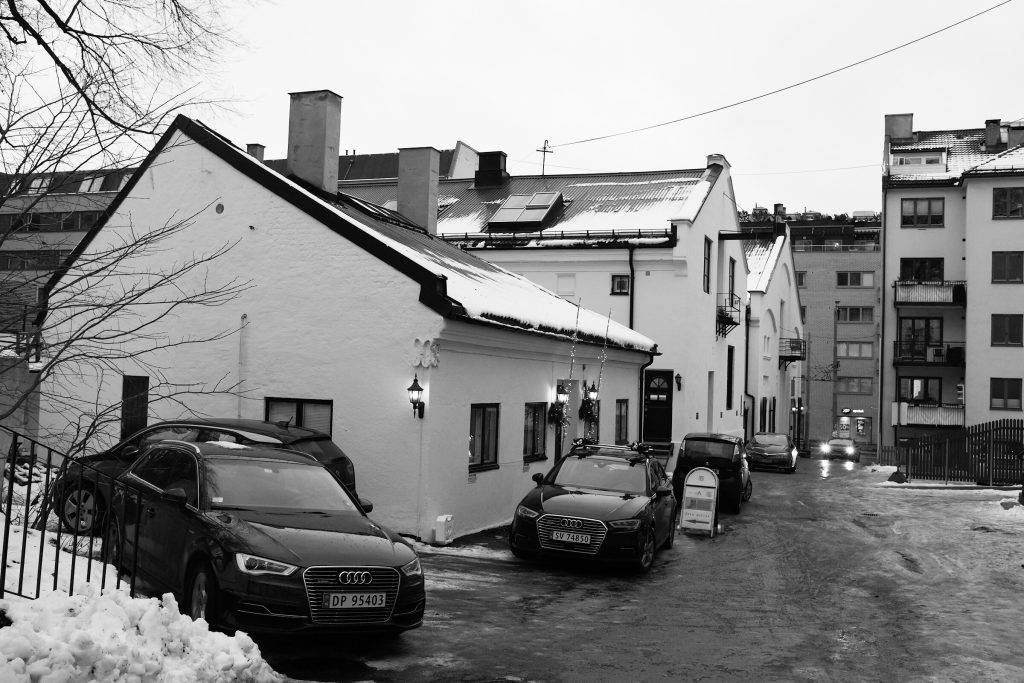
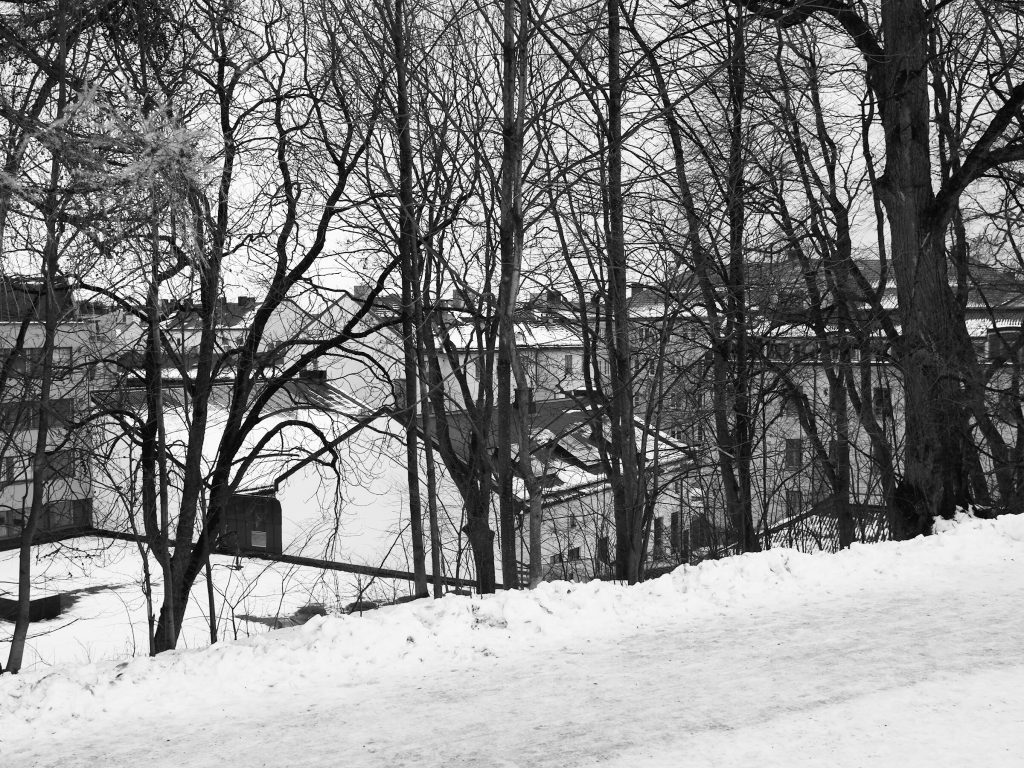
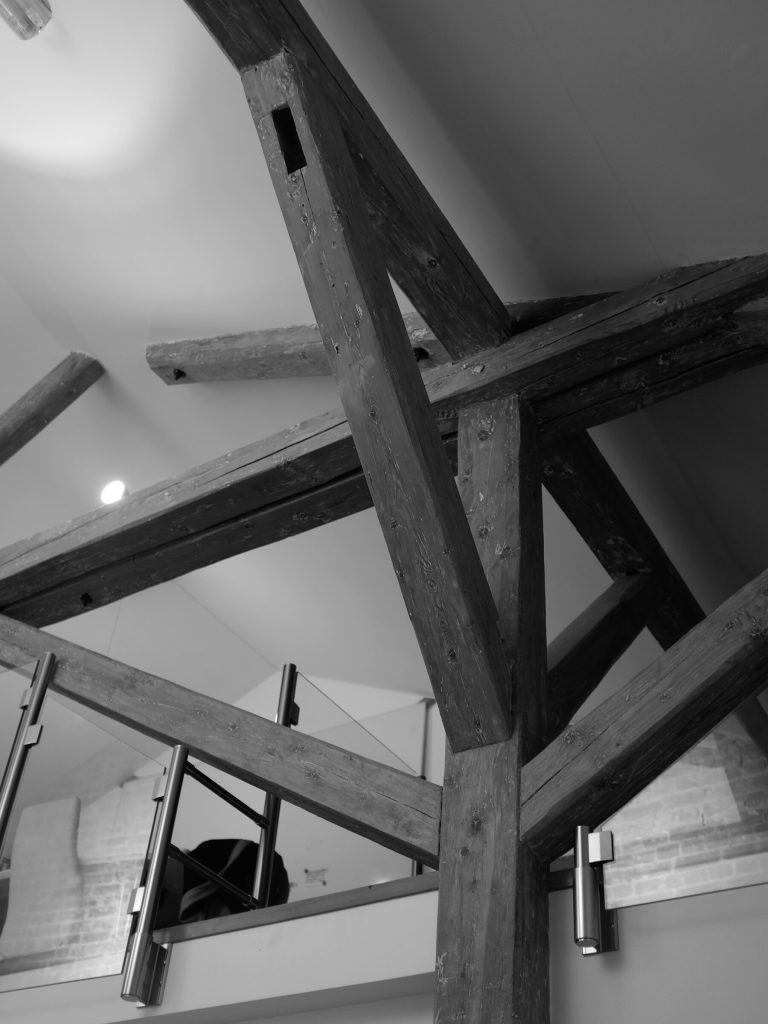
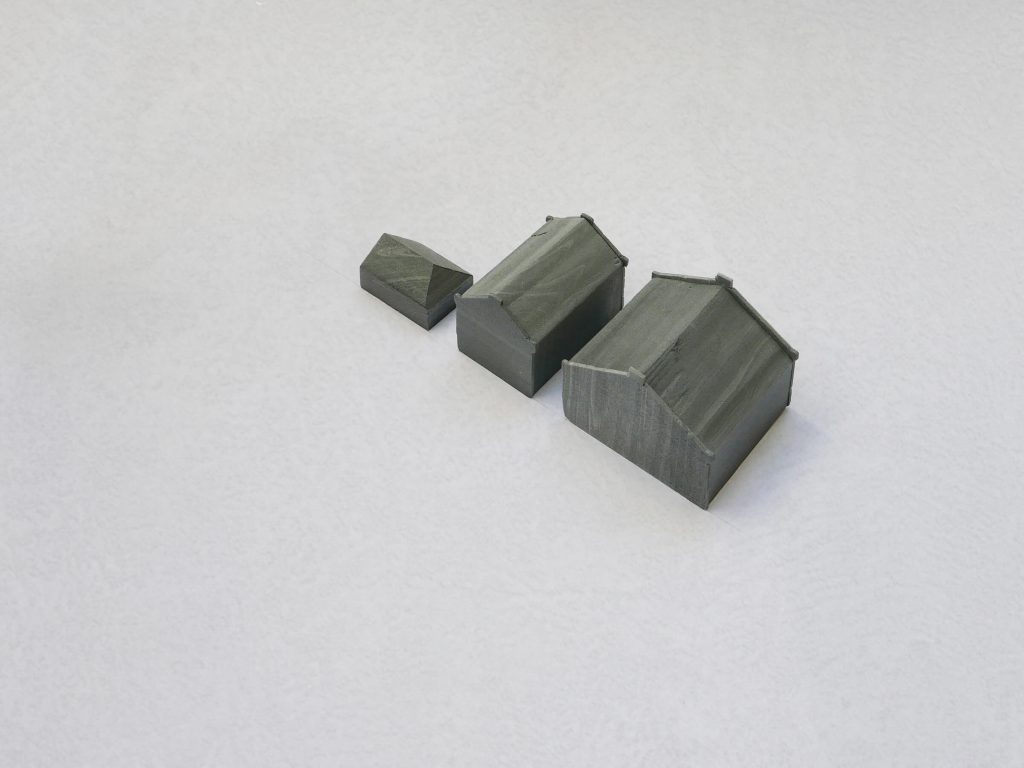
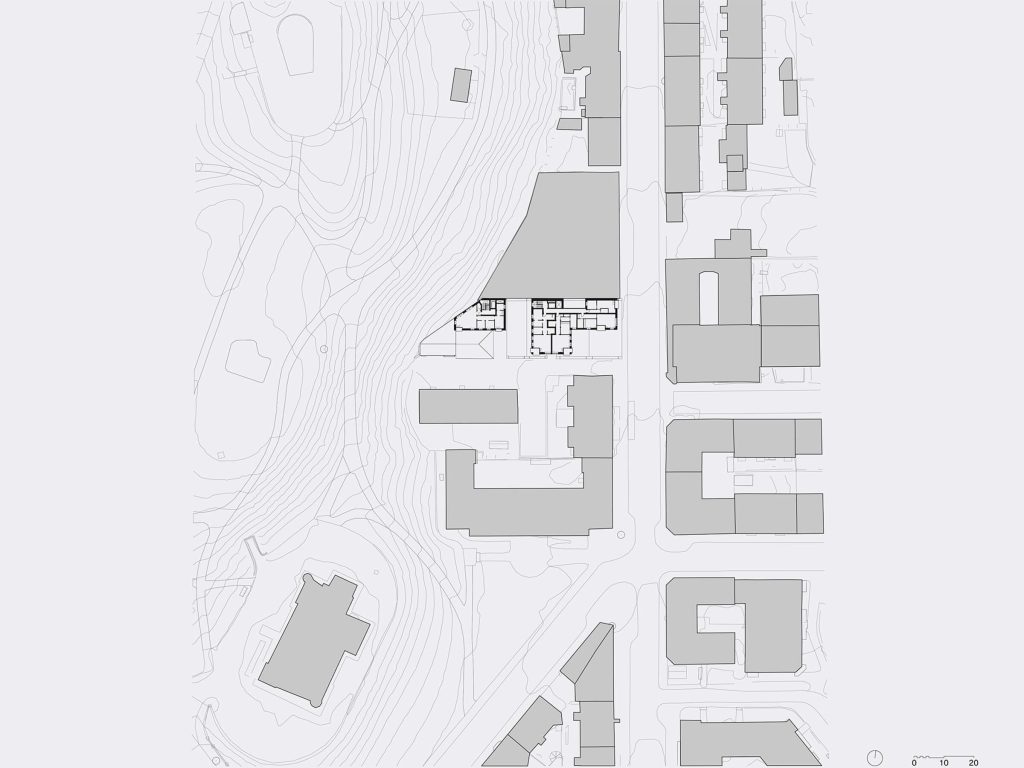
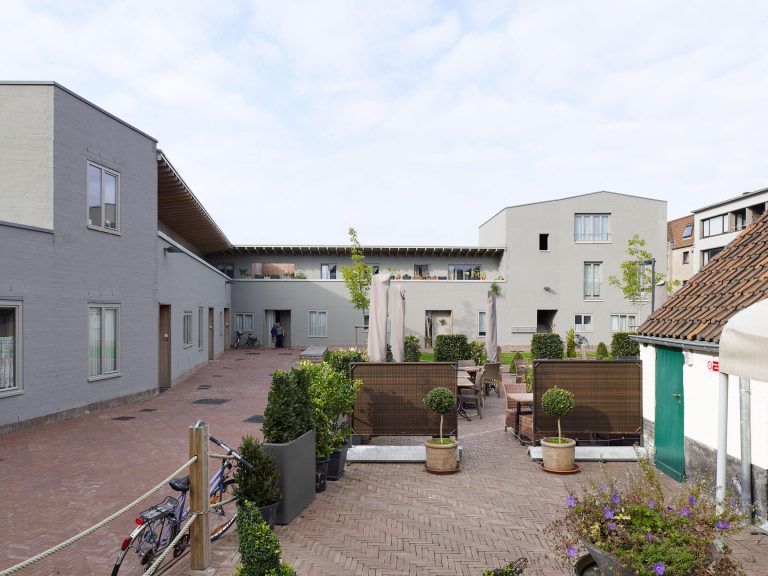
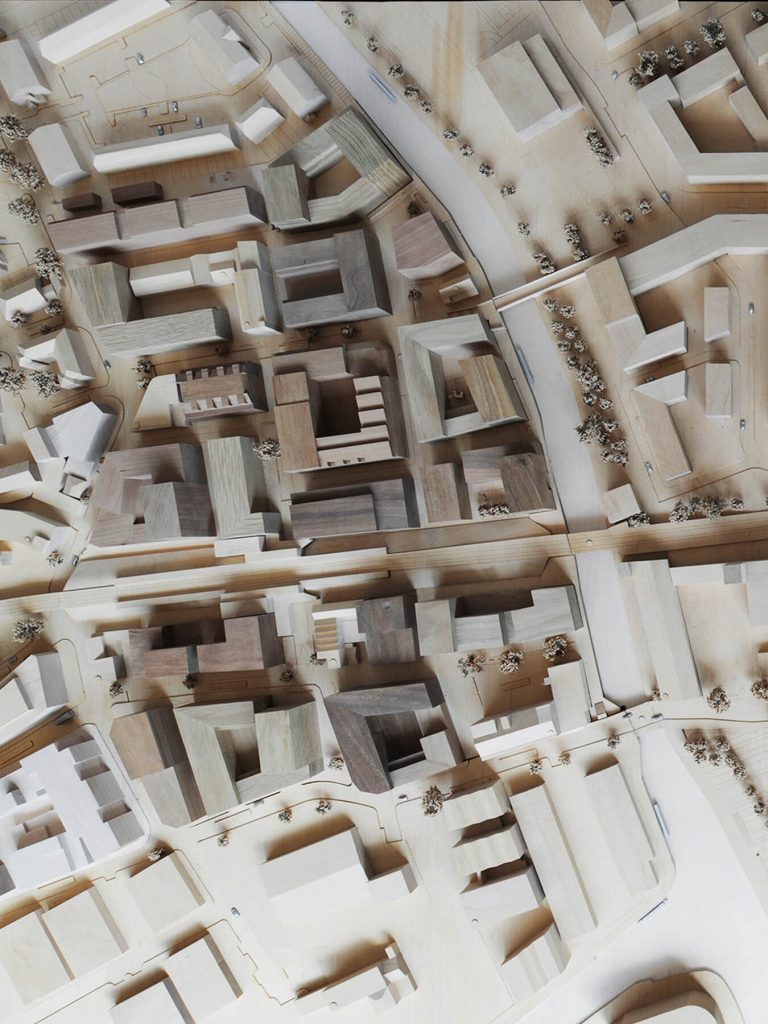
Thereses gate is long and straight, sloping strongly up the bed of a now-buried stream. Like much of Oslo, it is lined with nineteenth century apartment buildings in earthy-coloured limewash whose design feels a little bit Parisian. The tobacco factory at number 31 is by contrast made up of three low brick and timber buildings with a rustic simplicity; they border a yard shared with several apartment buildings, and a steeply sloping park edged with mature trees.
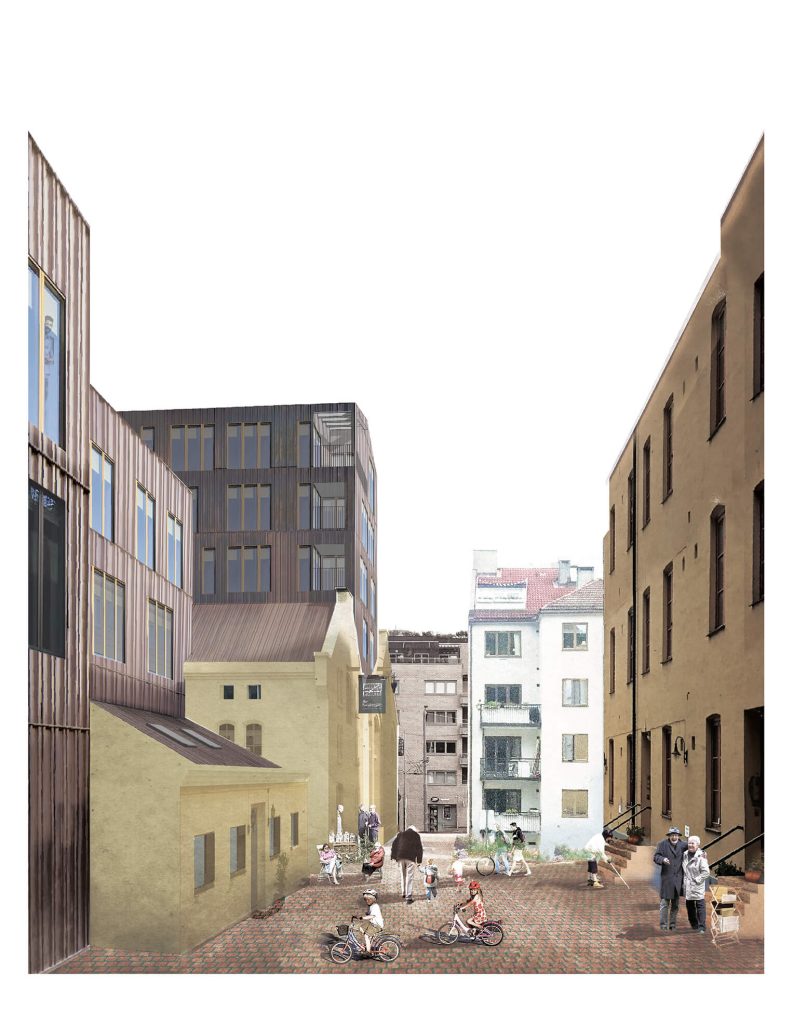
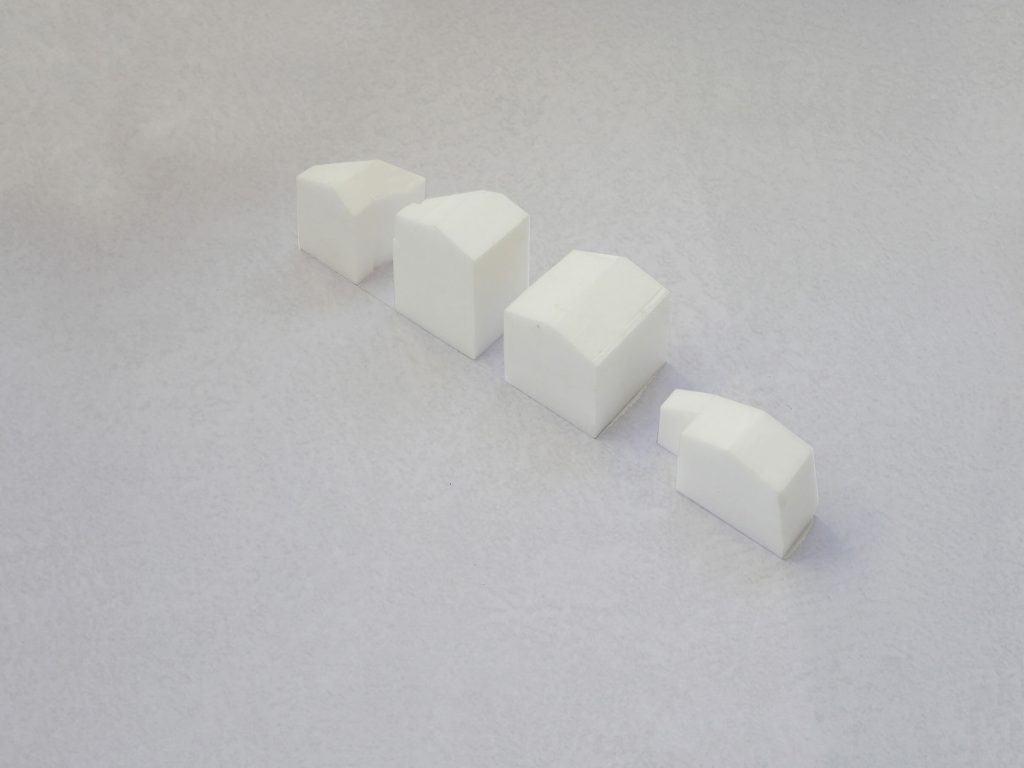
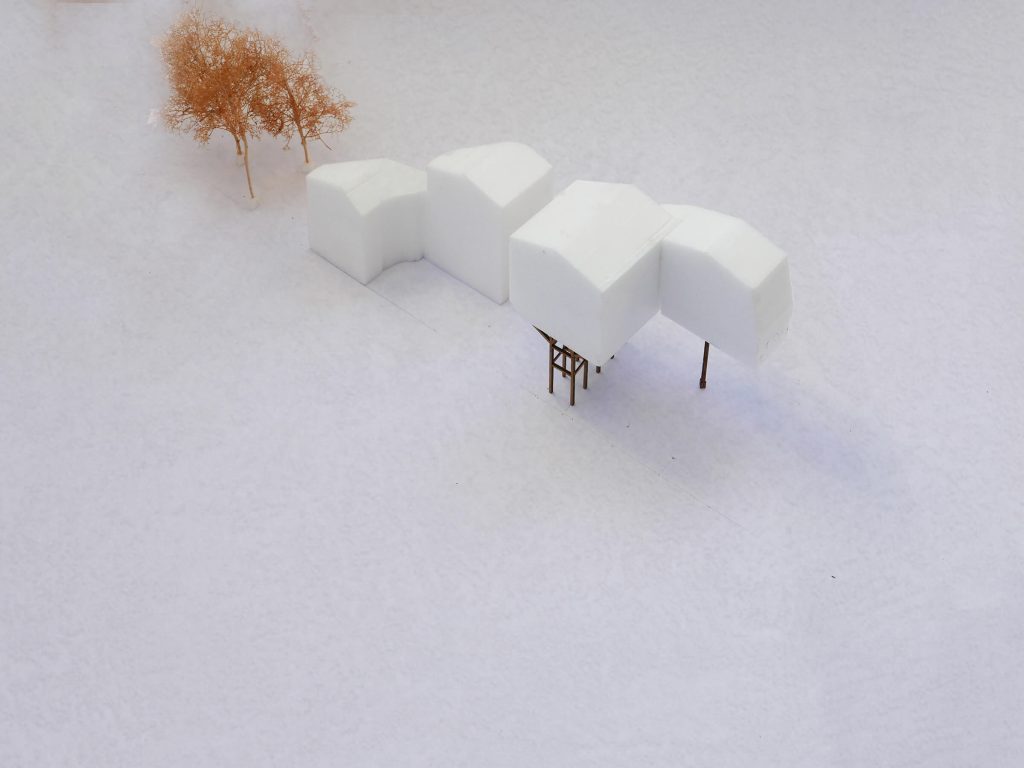
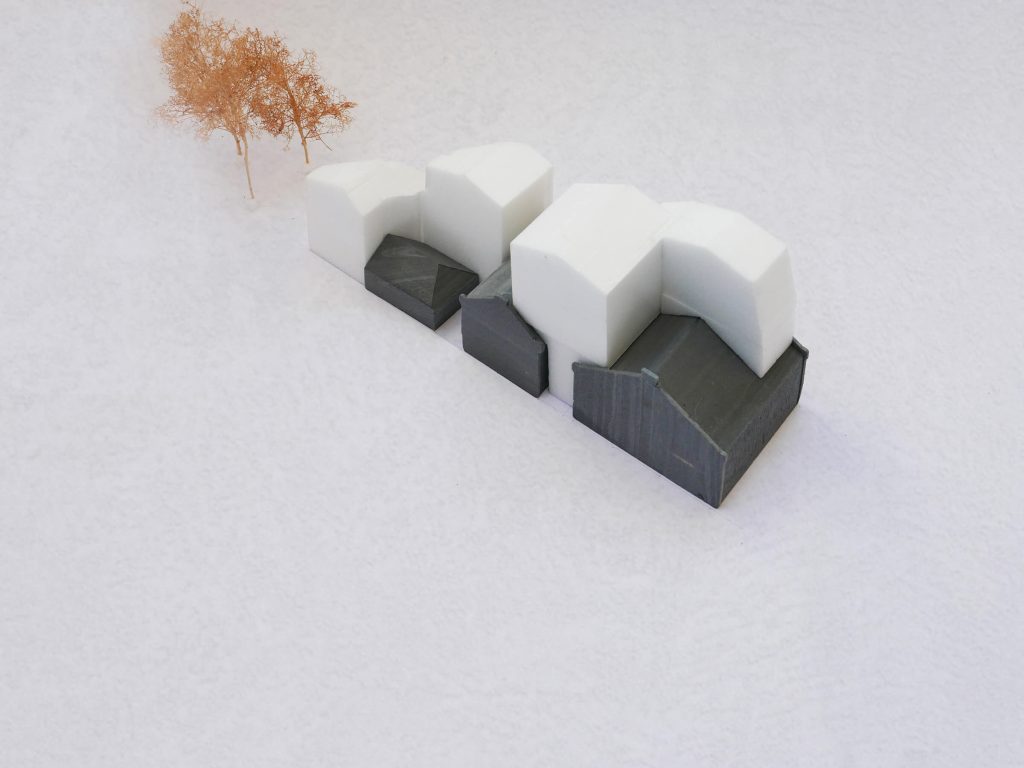
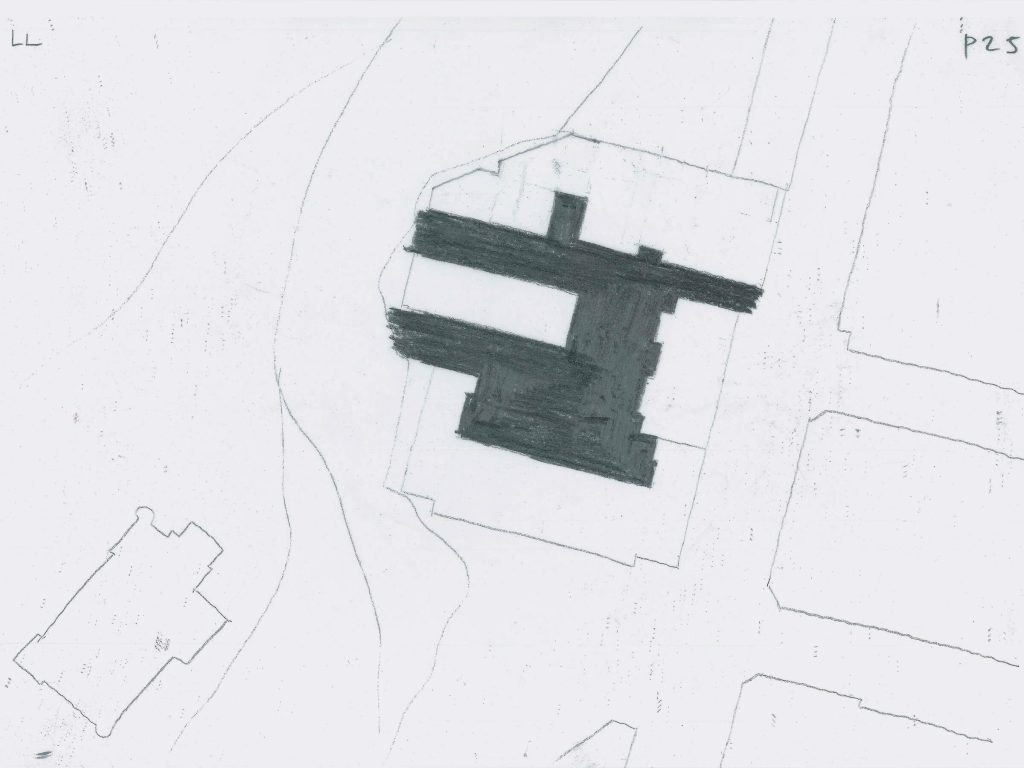
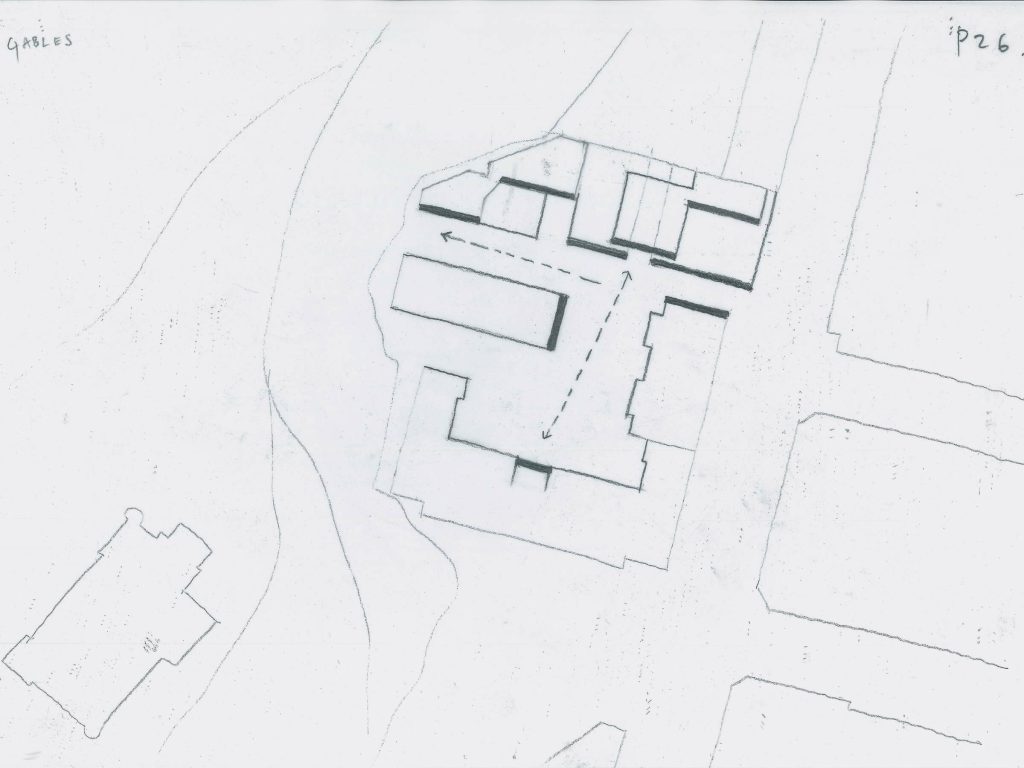
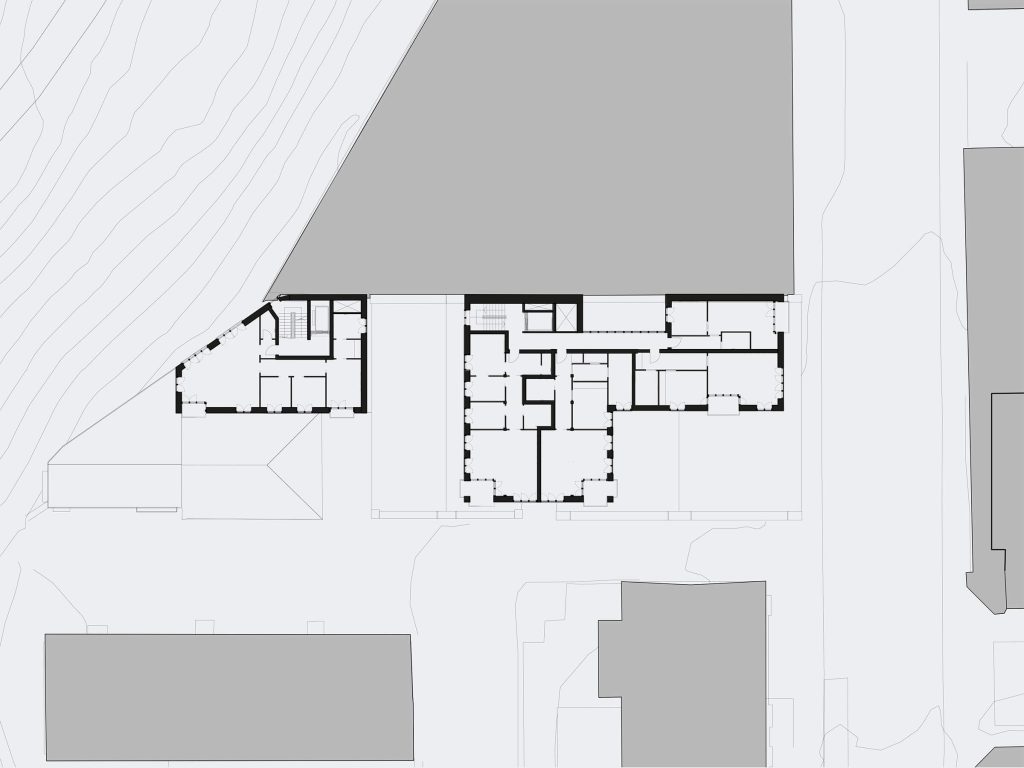
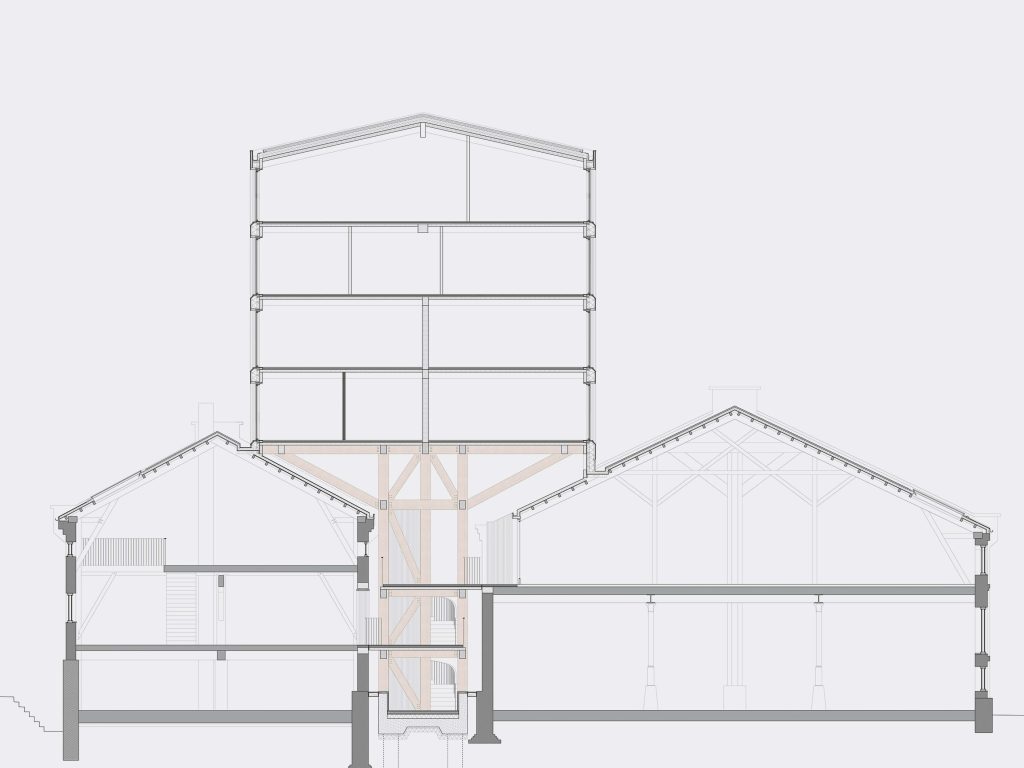
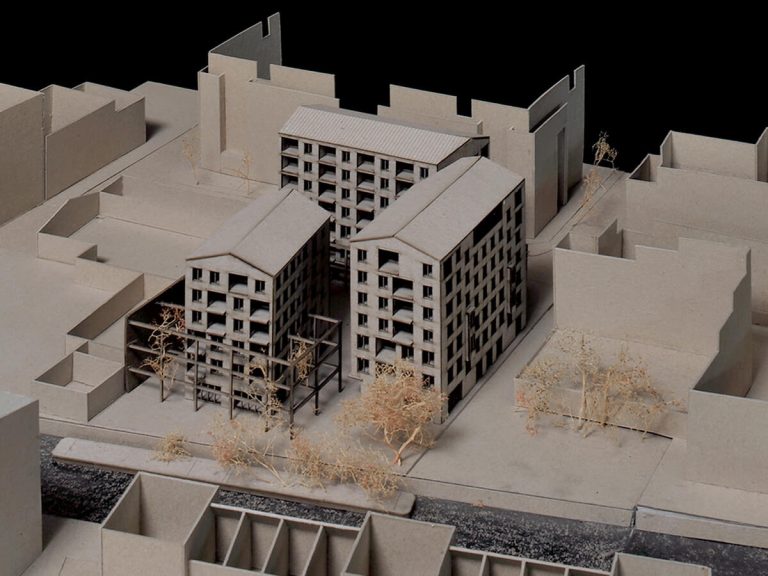
In this complex and layered situation, we have designed a project of densification, to add twenty apartments in a way that respects and works with the historic factory buildings. We will build behind and between the existing structures, minimising the impact on them – then cantilever out over their roofs. Two new blocks will be added, each made up of two smaller, stepping volumes – so that they are similar in scale and form to the factory buildings, echoing and talking to them and shaping the yard.
The factory buildings will be adapted for retail use, accommodating a grocer’s, a wine merchant and a café. The apartments will be a mix of sizes from 1- to 3-bed, with long views to the park and down the street. The fit with the existing is not just compositional, but structural and material. The new structures in steel and wood will bear carefully and lightly through the existing carpentry; they will be clad in patinated copper, like the factory roofs that they grow out of. This modestly-scaled project unites Oslo’s structuring elements of landscape, city and industry, and by adding a new layer of density while respecting the old, it articulates a significant moment in the city’s evolution.
Project
22 new apartments and refurbishment of factory buildings. In collaboration with Tuvalu Arkitekter.
Location
Theresesgate, Oslo
Client
Oslo House
Duration
2019 –
Status
Planning consent 2020
Gross external area
4,400 m2