Strange and Familiar
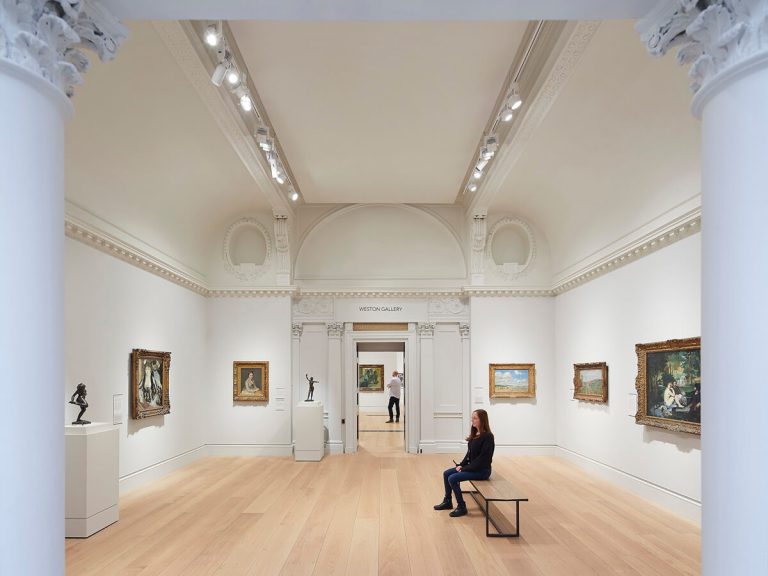
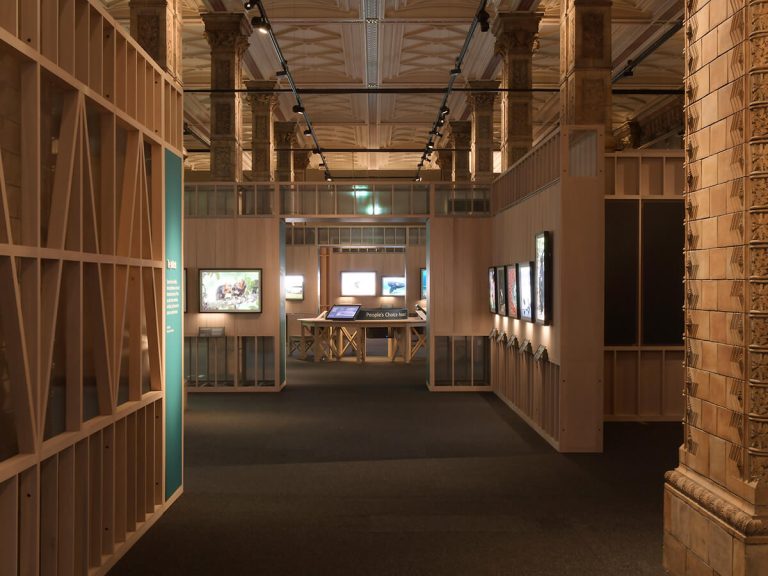
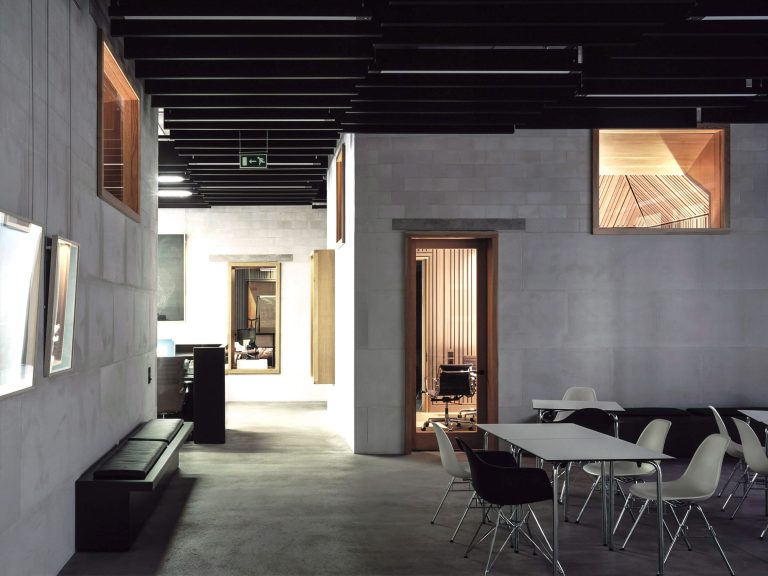
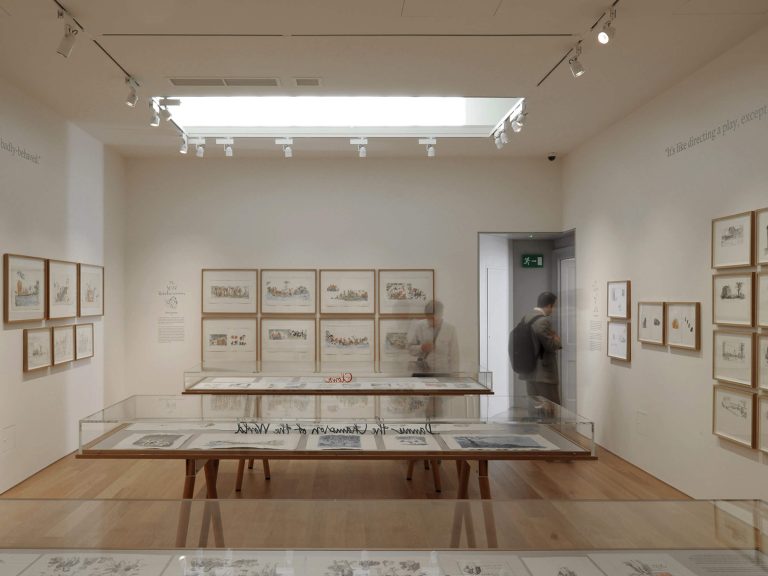
This exhibition showed multiple perspectives on British identity over eighty years, through works by twenty-two photographers as diverse as Henri Cartier-Bresson and Shinro Ohtake. Our exhibition design responded to the large number of individual photographers, the strictly chronological organisation of the work, the repetitive spatial structure of the gallery, and the origin of many of the works in picture periodicals and photo books. We imagined the space of the Barbican Art Gallery as a kind of library – sober but generous, repetitive but full of surprises. We built four new gallery rooms at the lower level, simple spaces with four walls and part ceilings, moderating the grand scale and high-level lighting to create a sense of intimacy with the works.
At the centre, we formed a generous reading room running the full length and height of the gallery. This central room was the backdrop for the display of photo books in vitrines; it was also an informal space where visitors could view many books on open shelves. The reading room was a comfortable space offering access to works in their original book form, and a social space supporting discussion and exchange with others. Although the exhibition scenography was ephemeral, it was also deep-rooted. By chance, our long central reading room occupied the location of the tall vertical void down to foyer level, filled in in 2003. Our intervention achieved a close fit with both the civic aspirations and the cavernous forms of the Barbican.
Project
Scenography for the temporary exhibition ‘Strange and Familiar’
Location
the Barbican Centre, London
Client
Barbican Arts Centre
Duration
2016
Photography
David Grandorge