Northwest Cambridge
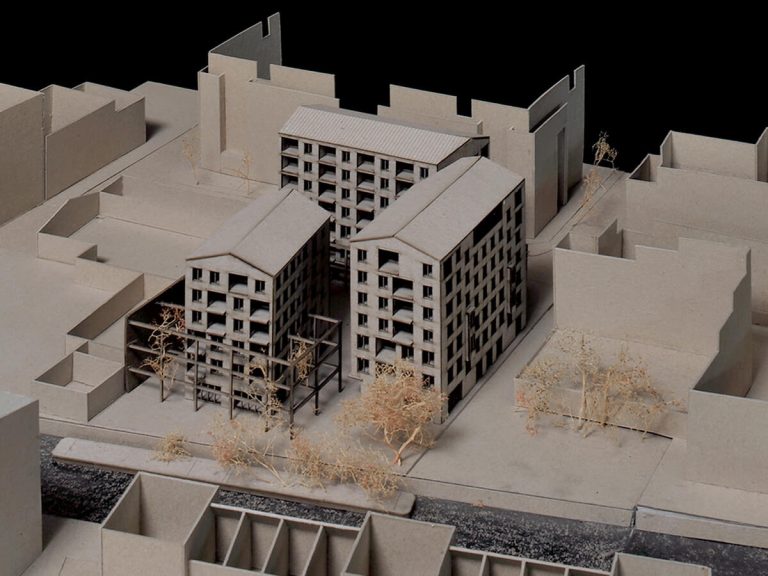
If Cambridge University is to maintain its competitiveness, its postgraduate researchers have to be able to afford to live there, in attractive and sociable surroundings. That’s the motivation behind the plan to build 3,000 homes in the fields to the northwest of the city. We were commissioned by the University to design 27 apartments on a prominent but small corner site, working in collaboration with Maccreanor Lavington Architects who have designed for the adjacent site.
In mitigation for building on Green Belt, the apartments are designed to the demanding Code for Sustainable Homes Level 5. The rooms are shallow and generously daylit, and the living spaces open up to the surrounds through large French windows.
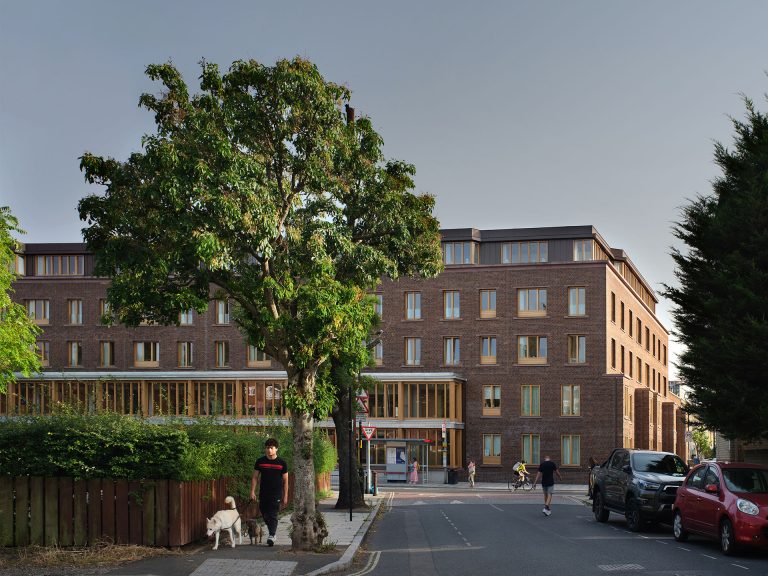
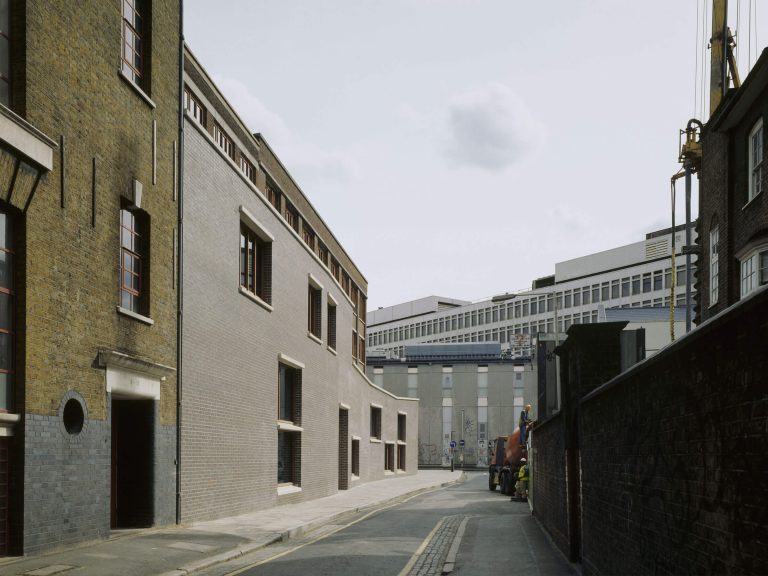
We have designed a well-proportioned urban building, forming a strong, continuous corner. The warm brickwork is punctuated by the regular pattern of tall windows, wrapping around the front faces. This calm exterior is interrupted on the ground floor corner, which cuts back and forms a passage to the rear; a shallow ground floor room faces onto the new square. The cut, lined in deep red glazed brick, is a sheltered spot where several paths cross, receiving the afternoon sun; the room will initially be used as a bike store, but its openness is suited to future retail or social use. These are small but significant gestures of sociability in the anticipation of city life.
Project
Construction of 27 apartments
In collaboration with Maccreanor Lavington Architects
Location
North West Cambridge
Client
The University of Cambridge
Collaborators
Maccreanor Lavington
Duration
2012–2017
Status
Built
Contract value
£5.2m
Gross internal area
3,266 m2
What the architects “have achieved is exceptional. With a couple of caveats, the two competing tendencies – the need for privacy and for some form of community – have been reconciled superbly with a shared design that is exceptionally well detailed, simple without being dull, and conducive to creating an exemplary facility for the University of Cambridge.”